|
News Detail
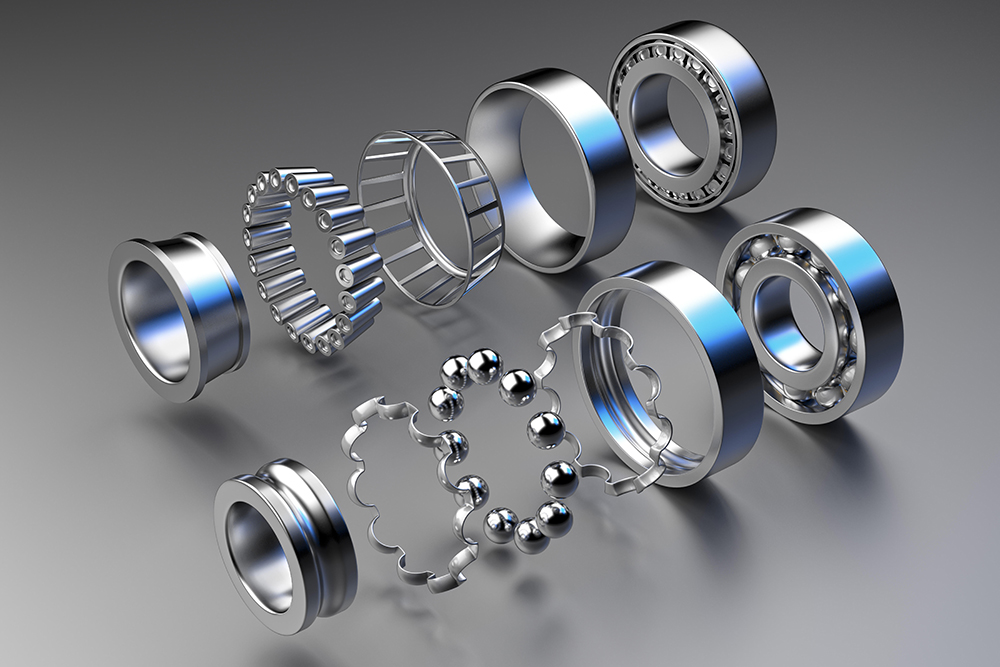
Maintenance and upkeep of bearings, PPH bearings tell you some tipsIssuing time:2023-12-06 12:00Author:PPH BearingSource:PPH Bearing Bearings are an important component in pump machinery equipment, playing an irreplaceable role in supporting and fixing mechanical rotating bodies, and reducing friction during motion. To ensure that bearings can be used for a long time with minimal wear, we need to pay attention to the maintenance and upkeep of bearings in our daily use. PPH bearings have been engaged in the bearing industry for many years, and today PPH bearings will talk to you about the maintenance and upkeep of bearings. The cleanliness has a significant impact on the lifespan and vibration noise of bearings. Before installing bearings, ensure that the installation surface and environment are clean. If there are foreign objects such as iron filings, burrs, dust, etc. entering the bearing, it will cause noise and vibration during operation, and even damage the raceway and rolling elements. So, before installing the bearing, it needs to be cleaned. The surface of the bearing is coated with anti rust oil, which must be carefully cleaned with clean gasoline or kerosene, and then coated with clean high-quality or high-speed high-temperature lubricating grease before installation and use. It should be noted that fully enclosed bearings do not require cleaning or oiling. PPH bearings provide you with professional bearing selection guidance services.
Lubrication has a crucial impact on the operation and lifespan of bearings, and special attention should be paid when selecting lubricating grease. Lubricating grease is made from base oil, thickeners, and additives. The performance of different types and grades of lubricating grease varies greatly, and the allowable rotation limit is different. It is important to pay attention to this when selecting. The performance of lubricating grease is mainly determined by the base oil. Generally, low viscosity base oil is suitable for low temperature and high speed, while high viscosity base oil is suitable for high temperature and high load. Thickener is also related to lubrication performance, and the water resistance of thickener determines the water resistance of lubricating grease. In principle, different brands of lubricating grease cannot be mixed, and even lubricating grease with the same thickener can have negative effects due to different additives. When lubricating bearings, it is a common misconception to apply as much grease as possible. Excessive grease in bearings and bearing chambers will cause excessive mixing of grease, resulting in extremely high temperatures. The amount of lubricant filling the bearing should be 1/2 to 1/3 of the internal space of the bearing, and should be reduced to 1/3 at high speeds. Some issues to pay attention to during installation and disassembly. Do not directly hammer the bearing end face and non stress surface during installation. Use pressure blocks, sleeves, or other installation tools (fixtures) to evenly distribute force on the bearing. Do not install through rolling elements to transmit force. If lubricating oil is applied to the installation surface, it will make the installation smoother. If the interference fit is large, the bearing should be heated in mineral oil to 80-90 ℃ and installed as soon as possible. The oil temperature should be strictly controlled not to exceed 100 ℃ to prevent tempering effect, hardness reduction, and affect size recovery. When encountering difficulties during disassembly, it is recommended that you use a disassembly tool to pull outward while carefully pouring hot oil onto the inner ring. The heat will cause the bearing inner ring to expand, making it more prone to detachment. The smaller the radial clearance of the bearing, the better. Not all bearings require the minimum working clearance, and the appropriate clearance must be selected according to the conditions. In the national standard 4604-93, the radial clearance of rolling bearings is divided into five groups - Group 2, Group 0, Group 3, Group 4, and Group 5. The clearance values are in descending order, with Group 0 being the standard clearance. The basic radial clearance group is suitable for general operating conditions, conventional temperatures, and commonly used interference fit; Bearings that operate under special conditions such as high temperature, high speed, low noise, and low friction should have a large radial clearance; It is advisable to use bearings with smaller radial clearance for precision spindles and machine tool spindles; Roller bearings can maintain a small amount of working clearance. In addition, there is no clearance for separated bearings; Finally, the working clearance of PPH aircraft bearings after installation is smaller than the original clearance before installation, because the bearings have to bear a certain amount of load rotation, as well as the elastic deformation caused by bearing fit and load.
Article classification:
Knowledge
|