|
News Detail
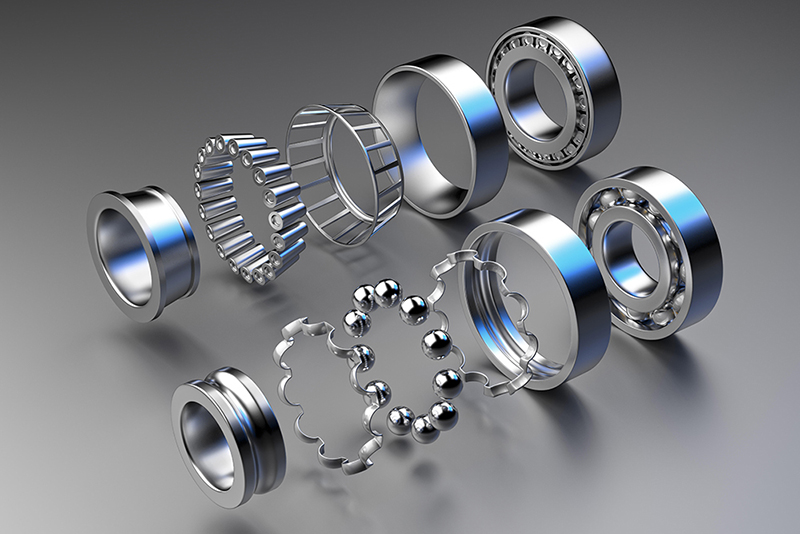
What is the structure and material of rolling bearings?Issuing time:2023-12-06 12:00Author:PPH BearingSource:PPH Bearing What is the structure and material of rolling bearings Rolling bearings are precision mechanical components that convert sliding friction between a running shaft and a shaft seat into rolling friction, thereby reducing friction losses. Rolling bearings generally consist of four parts: inner ring, outer ring, rolling elements, and cage. The function of the inner ring is to match and rotate together with the shaft; The function of the outer ring is to cooperate with the bearing seat and provide support; Rolling elements are evenly distributed between the inner and outer rings by means of a cage, and their shape, size, and quantity directly affect the performance and service life of rolling bearings; The cage can evenly distribute the rolling elements, prevent them from falling off, and guide them to rotate for lubrication. Material of rolling bearings: The rings and rolling elements of rolling bearings repeatedly withstand high contact pressure while undergoing rolling contact accompanied by sliding. Retainer, with one side in sliding contact with the collar and rolling elements, or one of them, while the other side bears tensile and compressive forces. Therefore, the materials, performance, and main requirements for the bearing rings, rolling elements, and retainers are as follows. Performance requirements for ring and rolling element materials: Rolling fatigue strength, high hardness, high wear resistance, and high performance required for retaining frame materials: In addition to good dimensional stability and high mechanical strength, good processability is also required. According to different purposes, it is also required to have good impact resistance, heat resistance, and corrosion resistance. Materials of Ferrule and Rolling Elements: High carbon chromium bearing steel is commonly used for rings and rolling elements. Most bearings use SUJ2 in JIS steel grades. Large bearings use SUJ3. The chemical composition of SUJ2 has been standardized as a material for bearings in various countries around the world. For example, it is the same type of steel as AISL52100 (USA), DIN100Cr6 (West Germany), BS535A99 (UK), etc.
When further impact resistance is required, chromium steel, chromium molybdenum steel, nickel chromium molybdenum steel, and carbon infiltration quenching are used as bearing materials to provide a hardened layer from the surface to the appropriate depth. Carbonized bearings with appropriate hardening depth, fine structure, suitable surface and core hardness have better impact resistance than bearings made of bearing steel. The chemical composition of steel used in general carburized bearings. Vacuum degassing treatment has been implemented, so the materials used have high cleanliness, low oxygen content, and good quality. Furthermore, appropriate heat treatment was adopted to significantly improve the rolling fatigue life of the bearing. In addition to the above-mentioned steel grades, high-speed steel with excellent heat resistance and stainless steel with good corrosion resistance are also used for special purposes. Retaining frame material: The material for stamping the retaining frame is low-carbon steel. According to different purposes, brass plates and stainless steel plates are also used. The material for cutting the retaining frame is high-strength brass, carbon steel, and also synthetic resin. For more bearing information, please follow the PPH Aviation Register Bearing website
Article classification:
Knowledge
推薦文章 |